
Insights Shaping C&D Recycling in 2026
As proud sponsoring members of the Construction & Demolition Recycling Association (CDRA), Dumpsters.com views the annual conference as a barometer for upcoming industry trends. Here are the three big takeaways from this year's conference.

Three Key Takeaways from the 2026 Construction & Demolition Recycling Association Annual Conference
The Dumpsters.com team is fresh from the Construction & Demolition Recycling Association (CDRA) Annual Conference in Tampa, Florida. As proud sponsoring members, we view this event as a barometer for where our industry is heading.
After days of panels and networking, one thing is clear: the industry is moving away from "best guesses" and toward rigorous precision. Whether you are a hauler, a construction manager or a sustainability director, here are the three themes defining the landscape in 2026.
1. The End of Visual Reporting
In 2026, relying on visual estimates for waste reporting is no longer just inaccurate — it is a liability. With the accessibility of advanced weighing technology, X-rays and jobsite cameras, there is no excuse for incomplete data. The consensus across experts was clear: scales are a prerequisite. Partners must reinforce this principle by working exclusively with facilities that possess adequate weighing processes. If you can't weigh it, you can't accurately report it.
2. The Rise of Third-Party Verification
Pressure to show high recovery rates (often 85%+) has created an unfortunate side effect: an increase in falsified data. To combat this, the industry is pivoting toward third-party verification as the ultimate risk mitigation tool.
The Recycling Certification Institute (RCI) has emerged as the gold standard. Their rigorous, 6- to 12-month evaluation reviews a facility's financials, end markets and processes.
For construction companies, choosing an RCI-verified partner is the most significant "green flag" available. It ensures that your diversion numbers are backed by data, not wishful thinking. As Geoff Brock of IPS noted, the most critical KPI is no longer just the percentage diverted — it is the percentage accurate.
3. Every Jobsite Needs a ‘Waste Plan’
A panel of leadership from two of the nation's largest construction companies drove home a simple truth: success happens before the first dumpster arrives.
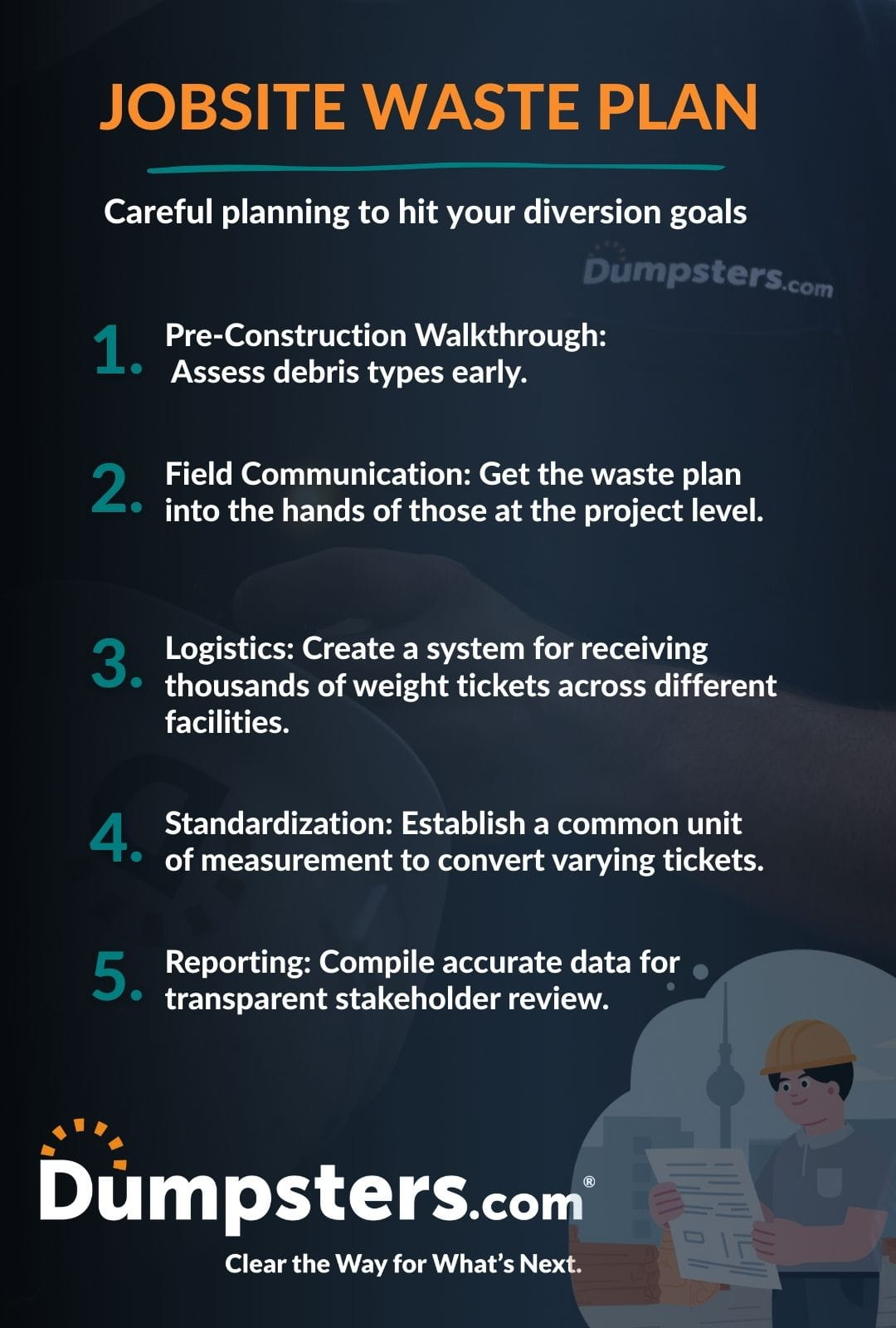
While some companies have dedicated sustainability teams, many do not. To close the gap, the conference highlighted five steps for an effective jobsite waste plan:
- Pre-Construction Walkthrough: Assess debris types early.
- Field Communication: Get the waste plan into the hands of those at the project level.
- Logistics: Create a system for receiving thousands of weight tickets across different facilities.
- Standardization: Establish a common unit of measurement to convert varying tickets.
- Reporting: Compile accurate data for transparent stakeholder review.
[Infographic] Building a Jobsite Waste Plan
The Bottom Line
Sorting through thousands of weight tickets and converting units is time-consuming, but accurate reporting is worth the effort to mitigate risk.
At Dumpsters.com, we understand that your team’s focus should be on finishing the project, not chasing weight tickets. We handle the logistics, data collection and reporting process for you — ensuring your project stays compliant, transparent and on track.
Is your current waste plan built for 2026 standards?
Not Sure Where to Start Your Waste Plan?
The Dumpsters.com team is here to help. Our experts build and support waste diversion plans for customers across the country. We'd love to help you, too.


