
The Waste Disposal Journey: A Guide to Where Your Dumpster Debris Really Goes
Learn the ins and outs of waste logistics from generation to landfills and beyond.
Make cleanup a breeze with a roll off dumpster:

Complete Guide to the Waste Management Lifecycle
Waste disposal doesn’t end once you toss your debris in a dumpster. So, what happens to it? Follow the waste disposal journey from your home or jobsite all the way to the landfill — and learn the best waste diversion practices along the way.
Where the Waste Journey Starts: Waste Generation and Separation
Americans produce hundreds of millions of tons of waste every year — and the total keeps rising. However, knowing how much waste we generate is just the start. Separating materials at the source — recyclables, compostables and recoverables — keeps them out of landfills and lays the groundwork for efficient collection, responsible disposal and maximum resource recovery.
Where Does Debris Come From?
Every project — from home cleanouts to large-scale industrial operations — creates its own mix of waste. Here’s a look at the different kinds of waste Americans generate, from municipal solid waste (MSW) and construction and demolition waste to electronic waste (e-waste), industrial waste and hazardous materials.
- MSW: Everyday trash from homes, offices and small businesses — like packaging, food scraps, paper and plastics. Generated during household cleanouts, community events or routine commercial operations.
- Construction & Demolition (C&D) Debris: Created during remodeling, roofing, demolition or new construction. Includes wood, drywall, concrete, metal and asphalt. These materials are often heavy and best managed with roll off dumpsters and recycling programs.
- E-Waste: Comes from electronics upgrades or office tech refreshes — old computers, TVs, printers and other devices. Proper recycling prevents hazardous materials like lead and mercury from entering landfills.
- Industrial Waste: Produced by manufacturing, energy production and processing facilities. Can include sludges, byproducts and bulk materials. Some can be reused or treated on-site to minimize environmental impact.
- Hazardous Waste: Generated by medical, automotive and manufacturing projects. Includes items like solvents, paints, batteries and chemicals that require special handling and disposal under strict guidelines.
How Much Waste Is Generated Each Year?
Even though the most complete national data on waste generation are from 2018 studies by the U.S. Environmental Protection Agency (EPA), these numbers give a good sense of just how much waste we produce — and why separating and recycling materials properly from the start is so important.
U.S. Annual Waste Production by Type
Waste Type | Estimated Annual Generation | Data Year / Source | Notes |
|---|---|---|---|
MSW | 292.4 million tons (2,000 pounds each) | 2018, EPA | Includes household and commercial trash. ~4.9 lbs per person per day. |
C&D Debris | ~600 million tons | 2018, EPA estimate | Large fraction of total U.S. waste; not included in MSW totals. |
E-Waste (subset of MSW) | 2.7 million tons | 2018, EPA | Includes selected consumer electronics; likely underestimates total e-waste. |
Non-Hazardous Industrial Waste | Estimated billions of tons (historic) | 1985, EPA | Current national figures not fully published; varies widely by industry. |
Hazardous Waste | ~30–40 million tons | Older EPA estimate | Exact current annual totals not publicly available; regulated under RCRA. |
Best Practices for Effective Waste Segregation
Whether you’re tackling a home cleanout or a construction project, separating waste before it hits the dumpster keeps your jobsite safe, compliant and cost-efficient.
- Sort as You Go: Keep recyclables, yard waste and general debris in separate piles or containers before loading the dumpster.
- Know What’s Prohibited: Don’t toss hazardous materials like paint, batteries or electronics. These require special handling.
- Keep Recyclables Clean: Avoid mixing cardboard, wood or metal with food or liquid waste.
- Avoid Overfilling: Load evenly and below the fill line to prevent safety issues and extra fees.
- Ask Your Hauler: Your dumpster provider can tell you which materials are recyclable or require special disposal.
A little sorting up front goes a long way — helping you save on disposal costs and reduce what ends up in the landfill.
Order a Dumpster Online
Shopping after hours? Too busy to make another call? Book the dumpster you need, when you need it. Order your dumpster online 24/7.
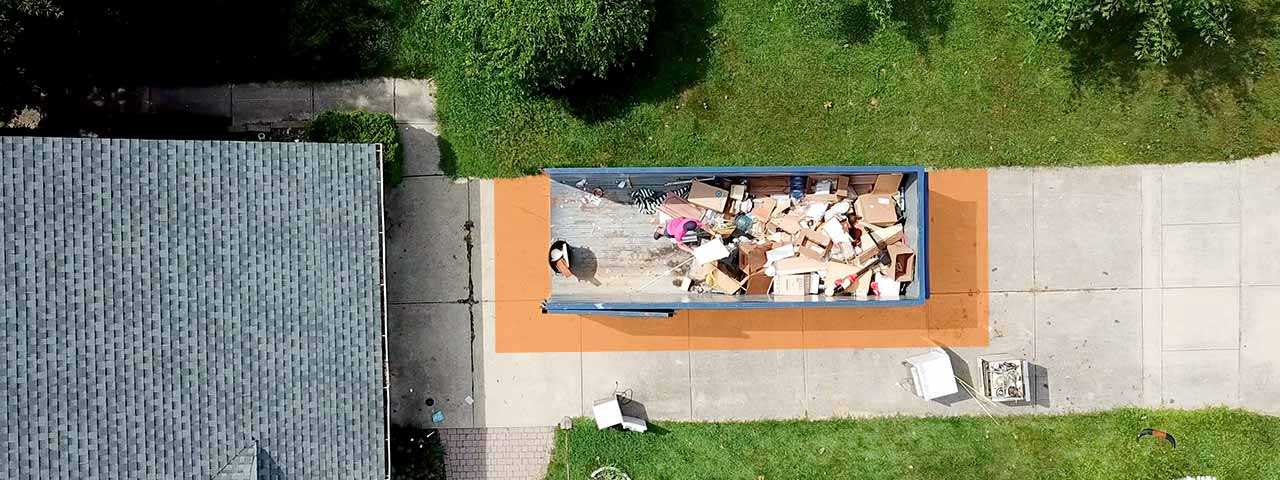
What Happens After Your Dumpster Pickup: Debris Collection and Transport
Not all waste ends up in the same location. Once your dumpster leaves your driveway or jobsite, it goes to either a transfer station or a materials recovery facility (MRF).

The Role of Transfer Stations
The first stop for debris is a waste transfer station. At a transfer station, waste is unloaded, sorted, consolidated and then transported to its final destination. Larger waste disposal trucks will take the sorted and consolidated waste to a landfill or landfill alternative, saving time, fuel and expenses.
What Is a Materials Recovery Facility (MRF)?
An MRF sorts recyclable materials, like paper, plastics, glass and metals, from waste. These recyclable materials are then cleaned and prepared to be resold.
There are two types of MRFs: clean MRFs and dirty MRFs. Clean MRFs only accept single-stream recycling, which are recyclable materials that are not mixed with other types of waste. At a dirty MRF, the goal is to sort through mixed waste types in the hopes that recyclable materials can be recovered.

Where Does Waste Go? Waste Treatment and Recycling
After sorting and consolidation, waste is brought to one of several final waste treatment destinations: landfills, recycling centers, composting facilities, waste-to-energy plants or hazardous waste facilities.

What Is a Landfill?
A landfill is a regulated facility designed to safely contain and manage waste that can’t be reused, recycled or otherwise recovered. Modern landfills use engineered systems such as liners, drainage and gas collection to help protect surrounding soil, groundwater and air.
In short, landfills are regulated sites used for responsible waste disposal. There are four main types of landfills:
- Municipal solid waste
- Industrial waste
- Green waste
- Hazardous waste
Almost all modern landfills are considered sanitary landfills. This means that the waste in the landfill is separated from the surrounding environment to allow the waste to decompose safely.
What Is a Class 3 Landfill?
A Class 3 landfill is a disposal site created specifically for "dry" waste that doesn't rot or produce toxic liquids. Because the materials are stable and non-hazardous, these landfills have simpler containment requirements than those used for household garbage or chemicals.
Common items sent to Class 3 landfills include:
- Construction debris: Concrete, brick, wood, and drywall.
- Yard waste: Tree branches and grass clippings.
- Bulky items: Old furniture and mattresses.
You may hear a Class 3 landfill referred to as a C&D landfill, inert landfill, dry waste landfill or non-MSW landfill.

Can You Take Trash to the Landfill Yourself?
Yes, most landfills allow public drop-offs, but keep these three things in mind:
Check the Type: Make sure the facility accepts your specific waste. A Class 3 landfill won’t take household "wet" trash, and most sites ban hazardous materials like paint or batteries.
Secure Your Load: Always tarp your truck or trailer. Many landfills will fine you or turn you away if your load isn't properly covered.
Be Ready to Pay: Most sites charge a "tipping fee" based on weight. Expect a minimum charge (often $20-$50) and bring your ID to prove local residency.
How Do Landfills Work?
Landfills use a layering system, consisting of a liner, drainage system, gas collection system and the waste.
What happens when a landfill is full? The landfill is capped — a multi-layered cover consisting of clay, soil and vegetation is placed on top of the landfill to protect the environment and control the release of landfill gases. Then, the area can be reused for a variety of purposes, including parks and wildlife habitats.
Alternatives to Landfills
Not all waste ends up at a landfill. Some types of waste cannot safely decompose, while others can be reused.

Recycling Centers
The U.S. recycles about 32% of materials annually. After recyclables have been sorted at an MRF, they’re separated by material. Materials like paper, plastic and metal are compressed and baled, while glass is crushed. Then, they’re sold to manufacturers to be made into new products.
Organic Waste and Composting Facilities
Organic waste, like food and yard debris, ends up at a composting facility. Composting facilities are also known as green waste landfills. Here, organic materials are typically shredded and mixed before decomposing to create nutrient-rich soil. The most common methods of composting are:
- Windrow composting: Materials decompose in long rows that are turned for airflow.
- Aerated static pile composting: A fixed pile is aerated with blowers instead of turning.
- In-vessel composting: Waste breaks down inside a sealed, controlled container.
Once decomposed, the compost is screened and prepared to be sold and reused.


Waste-to-Energy Conversion Plants
Combustible MSW and waste that remains after recycling efforts that can be safely burned are brought to a waste-to-energy conversion plant for incineration. Common types of waste brought to these plants include:
- MSW that can’t be recycled
- Non-recyclable plastics
- Soiled paper/cardboard
- Food and organic scraps
- Old textiles
- Bulky items like furniture or mattresses
- Light non-recyclable C&D debris
- Mixed commercial waste
Waste is burned to produce steam, which is used to power an electric generator turbine.
Hazardous Waste Facilities
Also known as hazardous waste landfills, these facilities treat, store and dispose of toxic materials. They’re designed to protect the environment and keep hazardous waste contained by following strict disposal rules.
Hazardous waste facilities sort and categorize waste, then treat it to reduce toxicity or prepare it for safe disposal. Waste is stored in sealed, labeled containers within secure, contained areas following strict safety and regulatory guidelines.

Keeping Waste Green: Sustainability, Environmental Impact and Waste Diversion
Managing waste responsibly isn’t just about following the rules — it’s about protecting the environment and making sure projects leave a positive impact.
Understanding Environmental Regulations for Waste
When handling and disposing of waste, there are federal, state and local regulations to be aware of. At the federal level, the EPA regulates household, manufacturing and industrial waste under the Resource Conservation and Recovery Act (RCRA). The RCRA helps to reduce waste, conserve energy and natural resources, and protect people and the environment from hazardous waste with initiatives like hazardous waste permits.
Why are these regulations important? Without rules regarding waste management, our health and safety, and the environment’s health, are at risk.
- Proper debris sorting keeps waste workers safe.
- Following official waste handling procedures helps prevent harmful chemicals from entering our soil, rivers, lakes and oceans.
- Good waste management reduces air pollution.
- Minimizing the use of landfills decreases greenhouse gas emissions and allows more space for farming, housing and natural habitats.
- Waste sorting allows for the recovery of recyclable materials with reduced energy use.
Corporate Sustainability Goals for Waste Reduction
For many organizations, reducing waste isn’t just a compliance issue — it’s a core part of their corporate sustainability strategy.
What Waste Diversion and RCI Certification Mean
Waste diversion refers to any strategy that keeps materials out of landfills and incinerators. This includes recycling, composting, reuse and waste-to-energy recovery. High diversion rates show a company’s commitment to sustainability — proving that materials are being responsibly managed and given a second life whenever possible.
To verify these efforts, the Recycling Certification Institute (RCI) provides third-party certification for recycling and processing facilities. RCI Certification confirms that a facility’s reported diversion and recycling rates are accurate, transparent and compliant with industry standards.
For businesses and municipalities, partnering with an RCI-certified waste hauler or facility ensures that waste diversion claims are credible — strengthening sustainability reporting, meeting Environmental, Social and Governance (ESG) goals and building public trust.
3 Steps to Stronger Corporate Waste Goals
1. Start With a Waste Audit
Map out what types of waste your business produces and identify opportunities to reduce, reuse or recycle.
2. Use a Waste Tracking System
Monitor disposal volumes, recycling rates and landfill diversion to measure progress toward sustainability targets.
3. Conduct a Life Cycle Assessment
Evaluate the full environmental impact of materials — from sourcing to end-of-life — to guide smarter purchasing and waste reduction strategies.
Embracing the Circular Economy Model
The circular economy reimagines waste as a resource, not a burden. Instead of the conventional “take, make, dispose” model, it focuses on keeping materials in use for as long as possible through reuse, recycling and recovery. In this system, products are designed for durability, components are repaired or remanufactured and raw materials are continually cycled back into production.
For businesses, embracing the circular economy means rethinking supply chains and waste management strategies. Conducting LCAs helps identify where materials can be conserved or substituted with recycled content. Partnering with RCI-certified facilities ensures that diversion data supports genuine circular practices.
By closing the loop between production, consumption and recovery, organizations can reduce environmental impact, cut costs and meet ambitious sustainability goals — while positioning themselves as leaders in responsible resource management.
Ready to Start Your Project? Let Dumpsters.com Handle the Disposal
Make your next cleanout, remodel or construction project easy, efficient and sustainable with Dumpsters.com. Our dumpsters help maximize recycling and waste diversion, keeping more materials out of landfills.
Your Project, Our Responsible Disposal
Next Up


