
Waste Diversion 101: How to Keep More Trash Out of the Landfill
Waste diversion is key to sustainability. Learn the benefits, methods, formula and how to meet C&D and LEED goals.
Make cleanup a breeze with a roll off dumpster:

What Is Waste Diversion?
Waste diversion is the process of redirecting trash away from landfills and incinerators through reducing, reusing and recycling waste. This is measured by a waste diversion rate, which is the percentage of trash kept out of landfills.

What Is a Waste Diversion Rate?
Your waste diversion rate is the percentage of your total waste that is kept out of landfills. This is measured using the following formula:
Waste Diversion Rate = (Weight of Diverted Waste / Total Weight of Waste) x 100
The Benefits of a Smarter Waste Management Plan
Waste diversion is good for your business, your community and the planet. Having a sustainable waste management plan provides environmental, financial and reputational benefits.
Environmental Benefits
- Conserve resources: Recycling and reuse reduce the need for new raw materials.
- Cut emissions: Keeping waste out of landfills lowers methane and overall carbon impact.
- Save energy: Using recycled materials requires far less energy than producing new ones.
- Protect landfill space: Every diverted load helps extend the life of local landfills.
- Reduce pollution: Fewer materials in landfills means cleaner air, soil and water.
- Support healthier ecosystems: Proper diversion keeps harmful debris out of natural habitats.
Financial & Reputational Benefits
- Save money: Less landfill waste means lower disposal costs.
- Earn value: Recyclables and reusable materials can generate revenue.
- Support communities: Cleaner land, air and water for everyone.
- Create jobs: Recycling and composting programs boost local employment.
- Build reputation: Shows your commitment to sustainability and responsible practices.
- Encourage sustainable habits: Inspires employees and communities to reduce, reuse and recycle.
The Core Methods of Waste Diversion: Reduce, Reuse, Recycle
Step 1: Reduce
Reducing waste at the source is the first step toward a more sustainable home or jobsite — small changes in planning and material use can make a big difference. Follow these simple tips to reduce waste at your jobsite or home:

- Buy only what you need: Plan meals and home projects to avoid excess materials.
- Choose minimal packaging: Select products with less wrapping or bulk options.
- Go digital: Reduce paper waste by using online bills, tickets and subscriptions.
- Order precise quantities: Measure carefully to prevent leftover materials.
- Standardize materials: Use uniform sizes to reduce offcuts and scrap.
- Plan construction efficiently: Optimize project sequencing to minimize waste.
- Use durable materials: Choose long-lasting options that won’t need early replacement.
- Track and adjust: Monitor waste trends to identify areas where material usage can be reduced.

Step 2: Reuse & Donation
Giving items a second life through reuse or donation reduces waste, saves resources and supports your community. Instead of tossing items, consider the following reuse options:
- Donate gently used items: Clothes, toys, furniture and electronics can go to local charities.
- Repurpose containers: Glass jars, tins and boxes make great storage solutions.
- Upcycle furniture: Give old tables, chairs or shelves a fresh coat of paint or new hardware.
- Swap with neighbors: Trade books, tools or kids’ items instead of throwing them away.
- Repair before discarding: Fix broken items like clothing or appliances to extend their life.
- Return unused materials: Send back excess paint, tile or lumber to suppliers or donate to building-material nonprofits.
- Repurpose scrap on-site: Offcuts of wood, metal or concrete can often be reused in future projects.
- Partner with donation programs: Work with organizations that accept surplus construction materials for resale or community projects.
- Label and store leftovers: Keep unused materials organized for future projects rather than discarding them.
Step 3: Recycling & Specific Waste Types
Recycling converts materials into new products, helping reduce landfill waste and conserve resources. Check out the following home and construction recycling tips.

General Recycling Tips
- Know your local rules: Check what materials your city or facility accepts.
- Clean and dry: Rinse containers to prevent contamination.
- Separate materials: Keep paper, cardboard, plastics, metals and glass in the correct bins.
- Avoid “wishcycling”: Don’t toss non-recyclable items hoping they’ll be recycled — they can ruin whole batches.
- Recycle electronics properly: Take e-waste to specialized drop-off locations.
- Label hazardous items: Batteries, paint and chemicals require special handling.
Construction & Demolition (C&D) Waste Recycling Tips
- Sort heavy construction materials like concrete, wood and metals for recycling.
- Work with local facilities that accept C&D materials.
- Reduce leftovers by planning material use carefully.
Organic Waste Recycling Tips
- Compost food scraps and yard waste whenever possible.
- Use bins or community programs to manage organic materials.
- Combine different types of organic waste for effective composting.
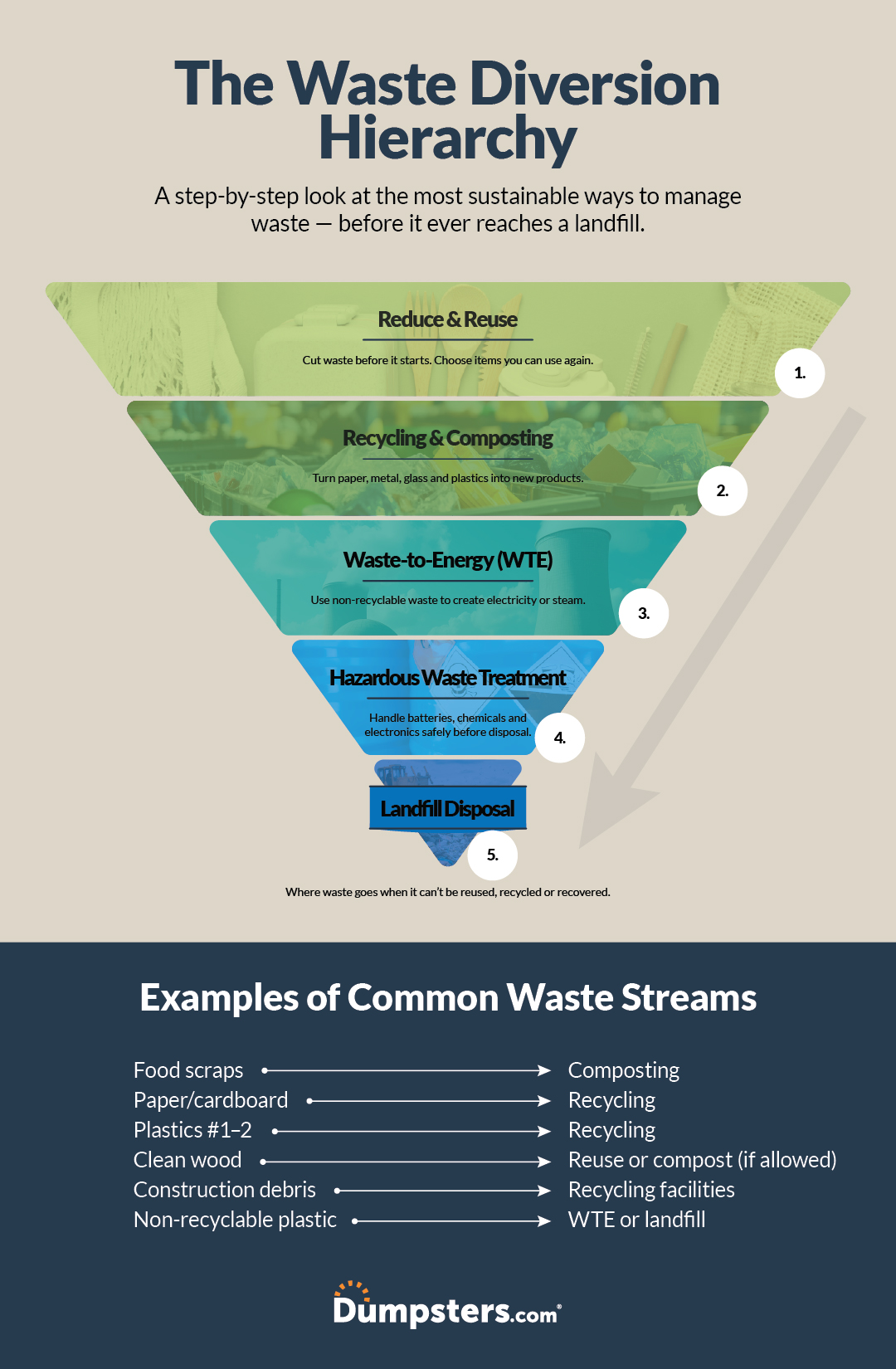
What Is the Waste Diversion Hierarchy? [Infographic]
Waste Diversion for Big Projects: RCI and LEED Certification
For large projects, effective waste diversion isn’t just good practice — it’s often a requirement for certifications like Leadership in Energy and Environmental Design (LEED) and Recycling Certification Institute (RCI), helping teams stay compliant, sustainable and efficient.
What are LEED and RCI Certifications?
LEED certification is a globally recognized green building certification developed by the U.S. Green Building Council (USGBC). It evaluates how environmentally friendly and resource-efficient a building is across categories like energy use, water efficiency, green building materials, indoor air quality and waste management. LEED helps buildings reduce environmental impact while saving money on energy and operations.
RCI refers to certifications or programs focused on recycling, composting and waste management in construction, facilities or corporate operations. It recognizes organizations that implement strong waste diversion strategies, proper recycling systems and sustainable material management. For contractors and facility managers, RCI certification demonstrates a commitment to reducing landfill waste and meeting sustainability goals.
Why Diversion Paperwork Matters
Tracking diverted materials shows you’re following regulations, meeting sustainability goals and staying accountable. It also helps identify cost-saving opportunities and demonstrate your commitment to responsible waste management.
How a Roll Off Dumpster Helps You Divert Waste
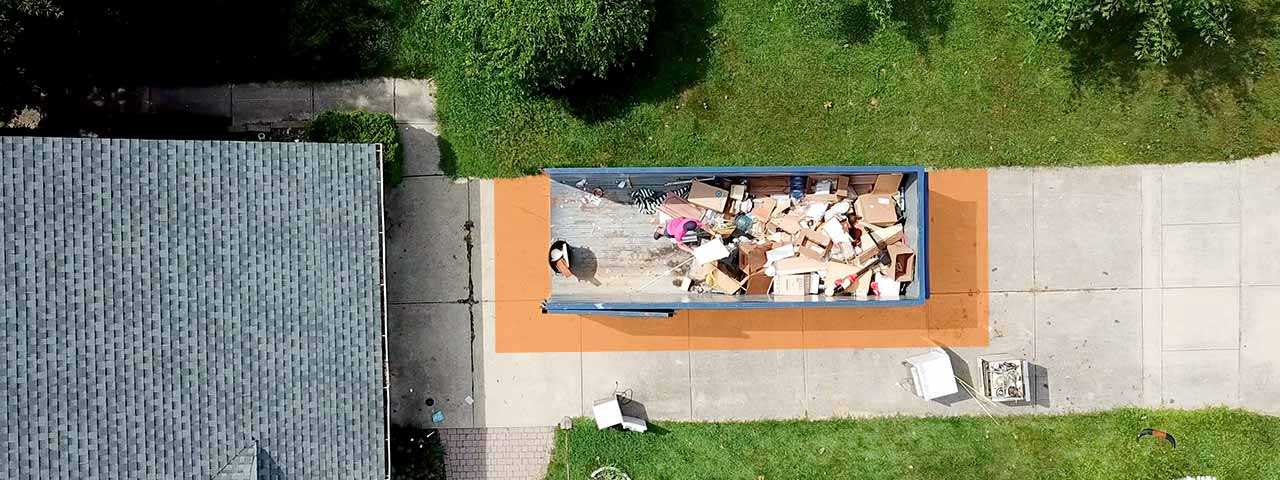
For large projects, keeping waste organized is key to effective diversion. A simple way to start is by renting two separate types of roll off dumpsters:
- Clean/Recyclable Waste: For materials that can be recycled, like concrete, wood or a C&D mix.
- Mixed Municipal Solid Waste (MSW): For materials that must go to the landfill.
Before you start sorting, conduct a waste audit to understand what’s in your waste stream. This helps you identify which materials can be diverted, reduce contamination, and make smarter decisions about dumpster placement and usage.
What Happens to Your Diverted Materials?
Materials collected in a dedicated recycling dumpster go to a materials recovery facility (MRF) for final processing, not directly to the landfill.
Order a Dumpster Online
Shopping after hours? Too busy to make another call? Book the dumpster you need, when you need it. Order your dumpster online 24/7.

Partner With LEED-Certified Dumpsters.com for Waste Diversion
Waste diversion doesn’t have to be complicated. With the right waste management plan, it saves money, keeps projects organized and helps protect the planet — all while supporting your LEED or sustainability goals. Meet Dumpsters.com’s LEED Green Associate, Robert Di Pasquale III, and learn more about how we keep your waste removal green.
Next Up


