
What Is a Waste-to-Energy (WTE) Conversion Plant?
Waste-to-energy plants turn your non-recyclable trash into a functional power source, reducing landfill reliance while generating electricity for the local grid.
Make cleanup a breeze with a roll off dumpster:

Key Takeaways
- How WTEs Recover Energy From Waste: WTE plants convert non-recyclable municipal solid waste into functional power, such as electricity or heat, by burning it at high temperatures to drive steam turbines.
- Environmental Trade-Offs: While WTE facilities reduce total waste volume by 90% and prevent the formation of potent landfill methane, they do release fossil-based carbon dioxide and produce toxic fly ash that requires specialized disposal.
- Strategic Waste Alternative: In the waste hierarchy, WTE is preferred over traditional landfilling because it occupies a much smaller physical footprint and extracts value from materials at the end of their lifecycle, but it's not always considered waste diversion.
Understanding Waste-to-Energy in the Waste Industry
WTE is the process of generating energy (usually electricity or heat) through the primary treatment of waste, which occurs at the end of the waste disposal journey. WTE offers an alternative to traditional landfilling by recovering value from materials that would otherwise sit in the ground for decades.
WTE facilities rely on municipal solid waste (MSW) as their fuel source. While most people think of MSW as everyday household trash, it also includes non-hazardous materials from commercial and industrial sites that can be safely processed to create power.
How Does a WTE Plant Work?
Modern WTE facilities use a multi-step process to ensure waste is destroyed efficiently while minimizing environmental impact.
1. Waste Receipt and Processing
Trucks arrive at the facility and pay tipping fees to offload waste into a massive storage bunker.
2. Combustion and the Rankine Cycle
The waste is fed into a furnace for mass-burn combustion. The rankine cycle occurs when this high-temperature heat boils water to create high-pressure steam, which drives a turbine to generate power.
3. Energy Recovery
Thermal energy is converted into usable electricity and sent directly to the local utility grid.
4. Managing Byproducts
This process leaves behind two types of residue. Bottom ash is the heavy, non-combustible material left in the furnace, while fly ash consists of fine particles captured by the plant’s air filtration systems.
5. Flue Gas Treatment
Before any air leaves the stack, modern scrubbers and sophisticated filters neutralize pollutants to meet strict air quality standards.
Types of WTE Technologies
While mass-burn combustion is the most common utility-scale method in the U.S., there are other WTE technologies:
- Gasification: Converts waste into "syngas" (synthetic gas made up of hydrogen and carbon monoxide) in low-oxygen environments for higher chemical efficiency.
- Anaerobic digestion: Breaks down organic waste, such as food scraps, to produce biogas using microorganisms.
- Refuse-derived fuel (RDF): Shreds waste and turns it into high-value fuel "pellets" specifically for use in industrial kilns or power plants.
Order a Dumpster Online
Shopping after hours? Too busy to make another call? Book the dumpster you need, when you need it. Order your dumpster online 24/7.
Scale and Scope: WTE in the US
The footprint of energy recovery is expanding as urban centers look for ways to move away from traditional dumping.

How Many WTE Plants Are in the US?
According to the Environmental Protection Agency (EPA), the U.S. currently operates 75 WTE facilities, mostly in the Northeast. Globally, WTE facilities are more common in areas where there isn’t a lot of space. Since the U.S. has more land than regions like European countries, WTE facilities aren’t considered as necessary. Landfills are typically preferred because they cost less upfront and don’t raise as many environmental concerns in communities.
How Big Are WTE Plants?
The average WTE plant size in the U.S. generates 34 megawatts (MW). For scale, a WTE plant in Lee County, Florida, that generates 59 MW processes 1,800 tons of waste per day.
Facility size varies based on regional needs. Small municipal plants might serve a single county, while massive regional hubs process thousands of tons of waste every single day to keep up with the demands of the local population.
Are WTE Plants Good for the Environment?
The environmental impact of WTE is a balance between immediate waste reduction and the management of atmospheric emissions.
What Emissions Do WTE Plants Produce?
WTE plants primarily emit carbon dioxide and water vapor. However, they also produce a variety of trace air pollutants that are strictly regulated by federal and state agencies.
Principal Air Emissions
While carbon dioxide is the primary greenhouse gas emitted, it’s often categorized into two types:
- Biogenic carbon dioxide: Comes from organic materials like paper, wood and food scraps. This is generally considered carbon-neutral as it’s part of the natural carbon cycle.
- Fossil carbon dioxide: Comes from petroleum-based products like plastics and synthetic fibers.
Regulated Trace Pollutants
Modern WTE facilities use advanced "scrubbing" technology to prevent the following pollutants from reaching the atmosphere:
- Particulate matter (PM): Tiny particles of dust and soot that can impact respiratory health.
- Acid gases: Including sulfur dioxide and hydrogen chloride, which can contribute to acid rain.
- Nitrogen oxides: These are precursors to ground-level ozone (smog).
- Heavy metals: Trace amounts of mercury, lead and cadmium found in household products (like batteries or electronics) that accidentally enter the waste stream.
- Organics: Complex compounds like dioxins and furans, which are created during the combustion process but destroyed by high operational temperatures (usually between 1,500°F and 2,000°F).
To protect local air quality, the EPA strictly regulates the release of mercury, lead and dioxins from these facilities through the Clean Air Act.

WTE plants do produce pollution, but their environmental impact is a complex trade-off between active atmospheric emissions and the mitigation of long-term landfill hazards. While modern technology has drastically reduced their toxic output, they remain a source of both greenhouse gases and industrial byproducts.
The Environmental Benefits and Downsides of WTE Plants [Table]
Feature | WTE Environmental Benefits | WTE Environmental Downsides |
|---|---|---|
Greenhouse Gases | Methane Avoidance: Prevents the formation of landfill methane, which is 25x more potent than carbon dioxide. | Fossil Carbon Dioxide Emissions: Burning plastics and synthetics releases fossil-based carbon into the atmosphere. |
Air Quality | Strict Regulation: Clean Air Act mandates scrubbers and baghouses to capture 99% of particulate matter. | Trace Toxicants: Potential release of dioxins, furans and heavy metals (mercury/lead), especially in older plants. |
Waste Byproducts | Metal Recovery: Uses magnets to salvage ferrous and non-ferrous metals for recycling. | Hazardous Ash: Produces toxic "fly ash" that requires disposal in specialized hazardous waste cells. |
Sustainability Strategy | Volume Reduction: Reduces total waste volume by 90%, saving massive amounts of land. | "Lock-In" Effect: Requires high waste volumes to stay viable, potentially discouraging recycling/composting. |
How Efficient Are WTE Plants?
Efficiency remains a challenge for the industry. Most WTE plants operate at 15% to 25% efficiency. This is lower than traditional fossil fuel plants because the fuel source (trash) is inconsistent in energy density and moisture content compared to coal or natural gas.
WTE vs. Landfills: Which Is Better?
Choosing between a landfill and a WTE plant often comes down to local infrastructure and project goals. WTE plants have a much more compact physical footprint compared to the hundreds of acres required for a landfill.
- The space problem: Landfills require hundreds of acres of land that stay unusable for decades, while WTE plants are more compact and reduce waste volume by 90%.
- Greenhouse gas comparison: Landfills produce methane, also known as landfill gas (LFG), a gas that traps 25 times more heat than carbon dioxide. While WTE plants do release carbon dioxide, they prevent methane from ever forming.
- Energy density: WTE plants capture energy instantly by burning waste at high temperatures to spin steam turbines. Landfills must wait decades for waste to rot and release gas.
WTE vs. Landfill Disposal [Table]
Feature | WTE | Landfill |
|---|---|---|
Primary Method | Controlled combustion | Long-term sequestration |
Energy Output | High (electricity/steam) | Variable (methane capture) |
Waste Volume Reduction | 90% reduction | Minimal reduction |
Byproducts | Ash (can be repurposed) | Leachate and methane |
Typical Cost | Higher CapEx*/tipping fees | Lower initial cost |
The Debate: Can WTE Be Considered Waste Diversion?
Many sustainability certifications, including LEED, view WTE as energy recovery rather than waste diversion.
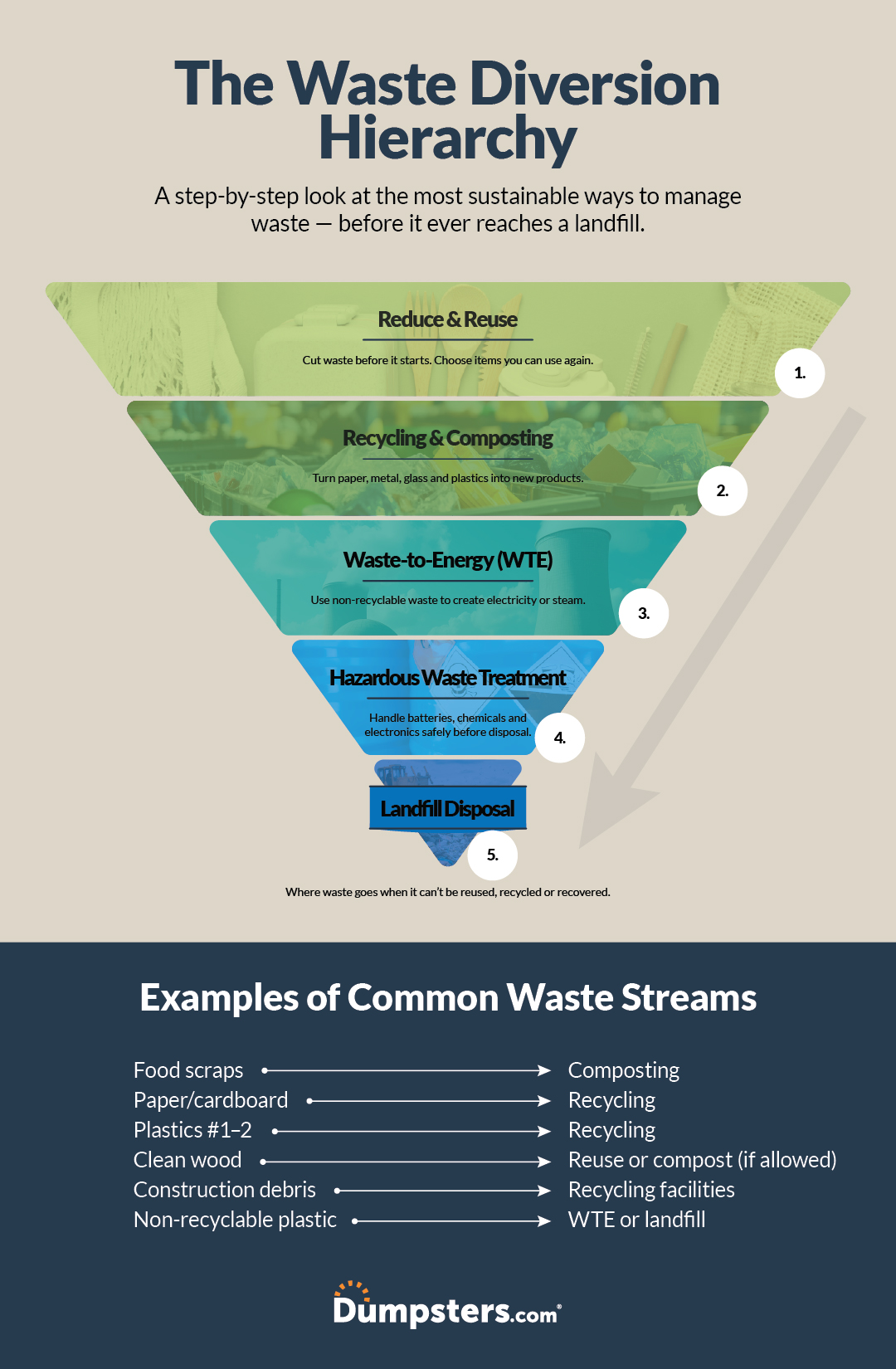
In the global waste hierarchy, WTE sits below "reduce, reuse, recycle" but is still a preferred option over "disposal" in a landfill.
In a circular economy, WTE plays a vital role by handling non-recyclable residuals to prevent them from entering the environment and making sure they produce energy. Adding recovery technology like this is a key component of sustainable waste management solutions because it extracts value from materials that have reached the end of their lifecycle.
What Is the Waste Diversion Hierarchy? [Infographic]
Where Does WTE Fit in a Construction Waste Strategy?
If you’re managing a jobsite, WTE is a powerful tool for handling debris that can’t be diverted through standard construction recycling methods. Use this checklist to determine if sending your roll off dumpster to a WTE facility aligns with your construction waste management plan:
☐ Conduct a waste audit: Identify which types of your debris are non-recyclable and separate them from materials you can reduce on your construction site.
☐ Verify accepted items: Check with the local facility to ensure your construction debris doesn't include prohibited items like hazardous materials.
☐ Compare costs: Calculate the difference between landfill tipping fees and WTE processing costs in your area.
☐ Check sustainability goals: Determine if WTE recovery aligns with your specific LEED or corporate sustainability targets.
Have questions about sustainability reporting? Contact Dumpsters.com for assistance.
Frequently Asked Questions (FAQ) About WTE
What is the difference between incineration and WTE?
Standard incineration simply burns waste to reduce volume. WTE adds an energy recovery component, using the heat from combustion to generate electricity or steam.
Do WTE plants produce toxic smoke?
Modern WTE plants use advanced flue gas treatment systems, including scrubbers and baghouses, to neutralize toxins and filter out particulates before they leave the stack.
What happens to the ash generated by WTE plants?
Bottom ash is often processed to recover metals and can sometimes be repurposed as a construction aggregate, while fly ash is typically stabilized and disposed of in specialized landfill cells.
Is WTE renewable?
It’s often considered partially renewable because it uses biomass (paper, wood, food) as a fuel source, though it also processes petroleum-based plastics.
How much does it cost to send waste to a WTE facility?
Tipping fees at WTE facilities typically range from $50 to over $100 per ton, often making them more expensive than landfills. These prices are driven by the high cost of building and maintaining the advanced filtration systems required to convert trash into electricity.
How do WTE plants help reduce greenhouse gas emissions?
WTE plants lower greenhouse gas emissions by preventing landfill methane (a gas 25 times more potent than carbon dioxide) and displacing the need for fossil fuel-based electricity.
Glossary Term Index
Next Up


