
Roll Off Dumpsters: What You Need to Know
A roll off dumpster is a large waste container that makes it simple to toss debris from residential projects, cleanouts or construction work. This guide explains what they are, how they work and everything you need to know to decide if a roll off dumpster is right for your project.
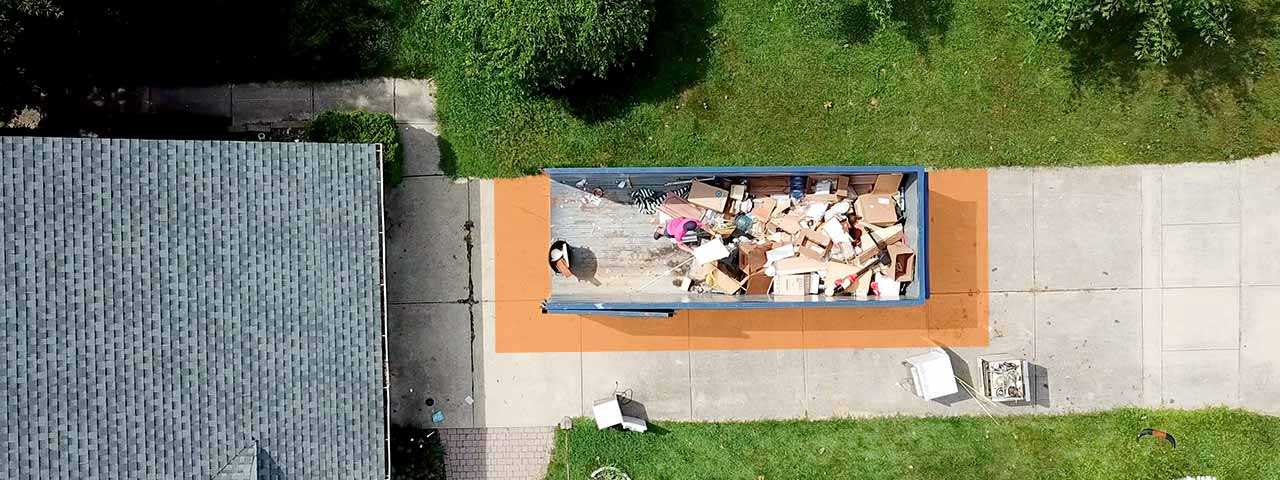
Make cleanup a breeze with a roll off dumpster:

What Is a Roll Off Dumpster?
Definition of a Roll Off Dumpster
A roll off dumpster is a large, rectangular waste container designed for use on projects that create more debris than regular trash services can handle. These containers are typically rented for short periods rather than purchased, since most people use them on a temporary basis when tackling cleanouts, renovation projects, construction work or landscaping jobs. A roll off truck delivers the container, the customer fills it with debris and the truck returns to haul it to the landfill.


Why Is It Called a Roll Off Dumpster?
George Roby Dempster, the man who invented the dumpster in 1935, combined his surname with "dump" to create the word "dumpster." The "roll off" part comes from the delivery process, which involves sliding or rolling the bin off the back of a hook-lift truck. When the rental period ends, the driver rolls it back onto the truck along the same rails. While not all roll off dumpsters have wheels anymore, it's this delivery method that gives the container its name and makes placement simple for both small and large bin sizes.
What Does a Roll Off Dumpster Look Like?
A roll off dumpster has a few features that make it easy to recognize and use on a wide range of projects. This typically includes small metals wheels on one end, an open-top design, a swinging door and sturdy walls made of welded steel panels.
Wheels (Sometimes)
Most roll off dumpsters have small metal wheels or casters on one end. These allow the container to slide along the truck rails during drop-off and pickup. These temporary dumpsters always stay put during the rental period. The only purpose of the wheels is to help the hauler position the container or remove it.
Open-Top Design
Roll off dumpsters are typically open at the top. This design makes it easy to toss in bulky items or awkward materials like furniture, drywall sheets, branches or remodeling debris.
Swinging Door
Nearly all roll off dumpsters have a full-size metal door on one end of the container. The door swings open so you can comfortably load heavy or oversized items. This is especially helpful when tossing furniture, lumber and any debris that would be difficult to lift over the side.
Container Structure
The walls of a roll off dumpster are made of heavy-duty welded steel panels. Their height varies by container size, but it typically ranges from waist height to above shoulder height. Many bins have a protective coating to prevent rust.

Common Dumpster Dimensions and Sizes
Dumpster sizes describe how many cubic yards each bin can hold. Common sizes include 10, 12, 15, 20, 30 and 40 cubic yards. Their width is usually similar to a pickup truck or a standard parking spot, although the height and length vary from size to size.
Order a Dumpster Online
Shopping after hours? Too busy to make another call? Book the dumpster you need, when you need it. Order your dumpster online 24/7.
How Roll Off Dumpsters Differ From Other Dumpster Types
Different disposal methods serve different purposes. Here's how roll off containers compare to other popular options.
Roll Off vs. Front Load
Front load dumpsters serve as permanent trash containers behind businesses and are emptied periodically into a large garbage truck.
Roll off dumpsters work differently. Customers typically rent them for short-term projects, like kitchen remodels or garage cleanouts. Learn more about front load vs roll off dumpsters.
Roll Off vs. Compactors
Compactors serve businesses that generate large amounts of waste. They have a mechanism inside that compresses debris so they don't require service as often.
Roll off dumpsters don’t have a compacting mechanism — just a simple, rectangular design that's perfect for bulky debris from one-time projects.
Roll Off vs. Dumpster Bags
Dumpster bags, such as Bagsters, provide a flexible option for small, lightweight projects. They're typically found at home improvement stores and hold far less material than a dumpster.
Roll off containers give you a sturdier structure, a larger capacity and the ability to handle heavier or bulkier debris.
How Are Roll Off Dumpsters Sized?
Roll off dumpster sizes use cubic yards to describe how much debris fits inside the container. The number shows the container’s total volume. For example, a 20 yard dumpster holds about 20 cubic yards of material. Because different materials have different weights, volume and weight don’t always align the way you might expect. A container could look full long before it reaches its weight limit, or it may hit the limit with empty space leftover.
What Are Common Uses for a Roll Off Dumpster Rental?
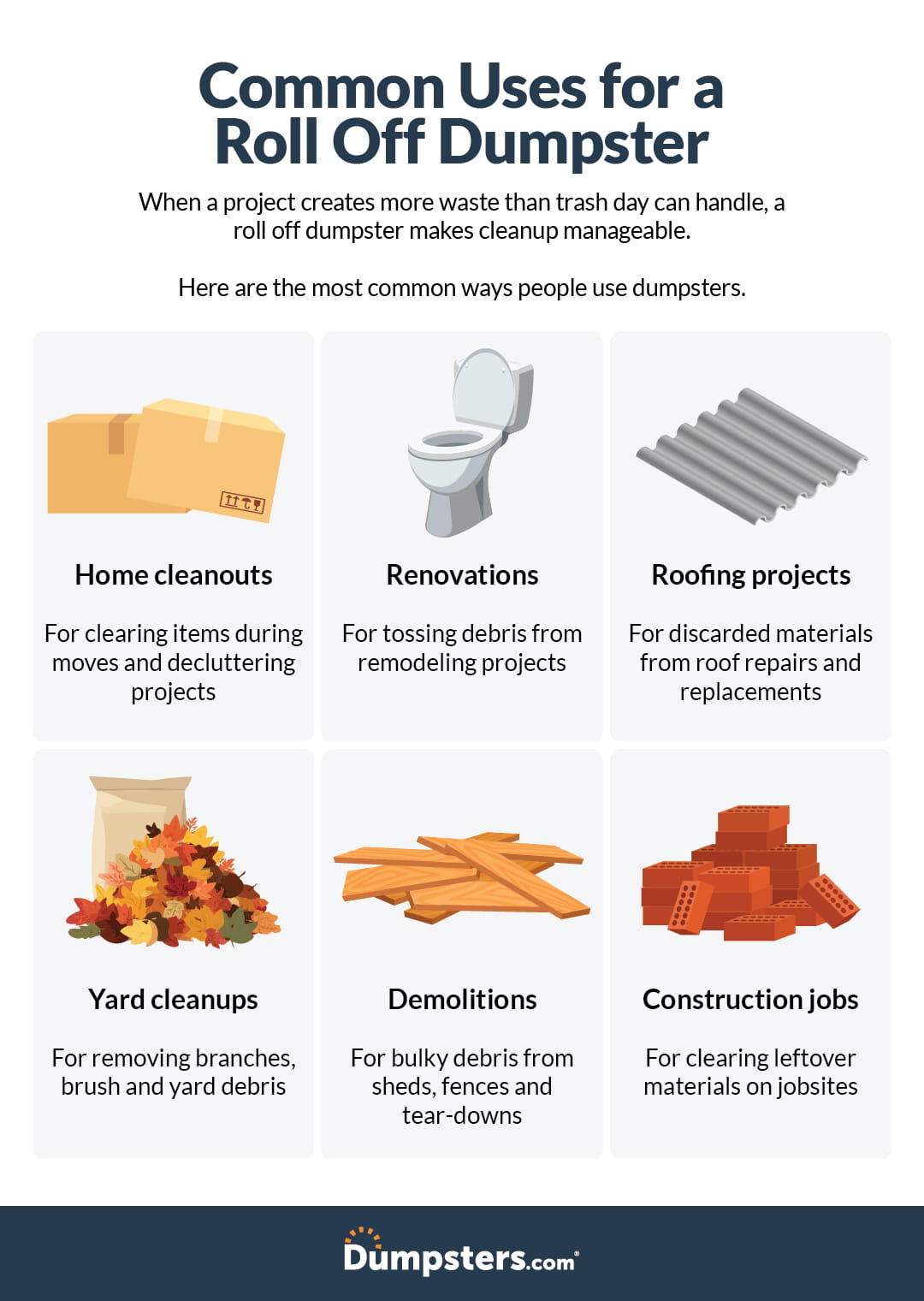
Common uses for a temporary dumpster include home cleanouts and demolition projects. People also rent them for things like roof replacements, yard cleanups and small demolition jobs. Basically, any time you’ve got more debris than a trash can or pickup truck can handle, a roll off dumpster does the job.
View Common Dumpster Uses Infographic
What Can Go in a Roll Off Dumpster?
Roll off dumpsters are ideal for many kinds of debris, but some items require special handling. Although different rules apply in each city, these are the basics of accepted and prohibited items.
Accepted Materials
A roll off dumpster can hold a variety of waste, including household junk, construction debris, furniture, flooring, roofing shingles, yard waste and cardboard. Regulations vary from city to city, but most materials from cleanouts, remodeling jobs and outdoor projects are OK to load in a dumpster.
Restricted and Prohibited Materials
Some materials require special handling and cannot go in a roll off dumpster. Examples include electronics with batteries or circuit boards, appliances containing refrigerants, chemicals, paints, hazardous waste and tires. This is due to the risk of fire or contamination in the bin or at the landfill.
What Are the Benefits of Using a Roll Off Dumpster?
Convenience
A roll off dumpster gives you a single place to put debris throughout a project. This simplifies the decision-making process and keeps your workspace clean.
Time and Labor Savings
With a roll off waste container on-site, you'll save the time and effort involved in hauling materials to the landfill or transfer station yourself.
Cost Effectiveness
Using one bin for an entire project often costs less than making trip after trip to the landfill or paying for multiple waste solutions.
FAQs About Roll Off Dumpsters
Where is the "fill line" or capacity marker located on a roll off dumpster?
Manufacturers place the fill line along the outer upper edge of the waste container’s walls. This marker shows how high you can load materials. Stacking debris above the line can lead to an overfill fee. If you’re unsure, just look near the upper rim for a sticker that says “Do Not Fill Above This Line.”
Where can you put a roll off dumpster?
You can put a roll off dumpster in a driveway, street or designated waste area on a construction site. Dumpsters need a flat, paved surface with enough clearance for the delivery truck to maneuver and set the bin safely.
Do roll off dumpsters require permits?
Some placements require dumpster permits, especially when the container sits on a public street or sidewalk. Driveway placements usually don’t require permits. Local rules vary, so check with your municipality before scheduling delivery.
Glossary Term Index
Construction and Demolition (C&D) Debris | Container | Cubic Yard | Driver Access
Dumpster | Fill Line | Loading Door | Roll Off Dumpster
Roll Off Truck | Service Area
Next Up


