
Dumpster Rental vs. DIY Dumping: Which Is the Better Option?
Hauling debris yourself sounds cheaper until you factor in gas money, time spent driving and landfill dump fees. We'll break down what each option costs so you know when to grab your keys and when to rent a dumpster instead.
Make cleanup a breeze with a roll off dumpster:

Key Takeaways
- DIY dumping is worth it for small projects: A single trip or two to the landfill on your own schedule can be convenient and inexpensive.
- Dumpsters are more efficient for large projects: Tipping fees, fuel and truck or trailer rental add up fast once you factor in more than a load or two.
- Vehicle size, project schedule and debris amount are the main factors that determine which option ultimately costs less.
When to Rent a Dumpster and When to Haul Debris Yourself
A dumpster rental is typically the better choice for large cleanouts, renovations or any project generating more debris than a truck bed can hold in a trip or two. DIY dumping works for small jobs, but it comes with its own set of costs and limitations. The right choice comes down to how much waste disposal your project requires, what you're willing to spend and how much time you want to put into hauling it yourself.
What Is a Dumpster Rental?
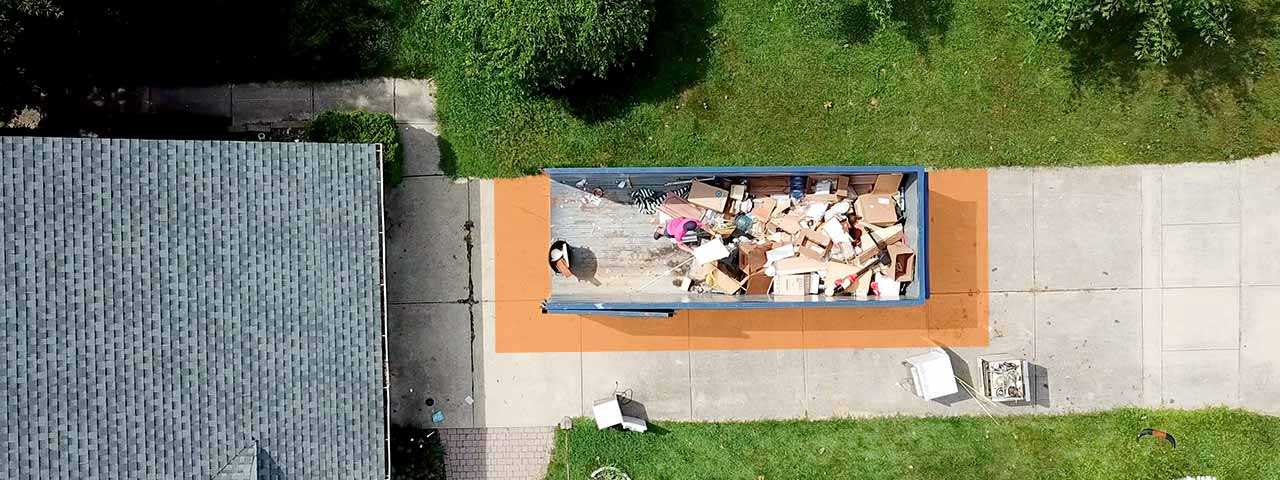
When you rent a dumpster, a specialized truck places it in a predetermined site near your workspace. You fill the container at your own pace and the truck returns to pick it up when you're done. It's a common choice for home cleanouts, renovation projects, estate cleanouts, garage cleanouts and landscaping projects, basically any job where debris piles up faster than a single vehicle can handle. Because the roll off dumpster stays on-site for the length of the rental, you avoid making repeat trips to a landfill during a labor-intensive home renovation or cleanup.


What Is DIY Dumping?
DIY dumping is the process of loading debris yourself, usually into a pickup truck or dump trailer, and hauling it to a landfill or transfer station. You pay a tipping fee based on debris weight or volume when you arrive, then repeat the process for as many loads as your project requires.
What Does 'Going to the Dump' Actually Mean?
While you'll still hear the phrase used occasionally, "going to the dump" is a holdover from a different era. Unregulated, open dump sites have been illegal in the U.S. for decades. Today, "the dump" refers colloquially to a landfill or transfer station, both of which are regulated facilities designed to adhere to current environmental regulations.
Order a Dumpster Online
Shopping after hours? Too busy to make another call? Book the dumpster you need, when you need it. Order your dumpster online 24/7.
How to Decide if DIY Dumping Is Best for Your Project
The right call comes down to a few factors: how much debris you have, what vehicle you have access to, your project budget and what you're throwing away.
1. How Much Debris Do You Have?
Use a Pickup Truckload as Your Benchmark
If your project would take more than two or three truckloads to clear, a dumpster rental is worth considering.
Some Projects Are Just Too Big for DIY Dumping
Home renovations, multi-room cleanouts and other large-scale projects generate more debris than a few truck runs can manage.
2. What's Your Budget?
The Cost of DIY Dumping
Expect to pay a tipping fee at the landfill plus fuel costs, and possibly truck or trailer rental if you don't already own a suitable vehicle. Multiple loads mean paying some of these fees multiple times.
The Cost of Renting a Dumpster
Some companies offer all-inclusive flat rates covering delivery and waste up to a specific weight limit, while others charge for delivery and disposal separately.
3. What Are You Throwing Away?
Both disposal options end up in the landfill, so their restrictions on material type reflect that. Most landfills accept materials like household junk, yard waste, furniture and appliances. Prohibited items include hazardous waste, electronic waste (e-waste), tires, paint and batteries. These restricted materials require a recycling center or dedicated hazardous waste facility. Construction and demolition (C&D) waste is typically fine for both, though landfills may charge differently depending on the material mix.
4. What Kind of Vehicle Do You Have Access To?
DIY dumping requires a vehicle that can handle the weight and volume of your debris, typically a pickup truck or dump trailer. If you don't already own one, factor the cost of a rental into your estimate. Dumpster rentals don't require a vehicle. A roll off truck delivers and picks up the container for you, so all you need is a paved, flat spot for it to sit.
Need a dumpster to handle the mess?
Get a Price and Place Your Order Give Us a Call to Learn More
Dumpster Rental vs. DIY Dumping at a Glance
Weighing a dumpster rental against DIY dumping comes down to a few key factors. As you consider your options, you may want to look into junk removal services as well.
Factor | DIY Dumping | Roll Off Dumpster |
|---|---|---|
Capacity | Depends on the vehicle:
| Containers range from 10 to 40 cubic yards |
Project Timeline | Depends on the distance to the landfill and available time and labor | Accommodates flexible or strict schedules |
Weight Limit | Depends on the vehicle; | Roll off bins can hold up to 10 tons of debris |
Vehicle Needed | Pickup truck, van or trailer | None |
FAQs About DIY Dumping
How many trips to the landfill would equal one dumpster rental?
It depends on your vehicle and dumpster size, but a 20 cubic yard dumpster typically holds the equivalent of six to eight full pickup truckloads.
Are there hidden costs when hauling debris to the landfill myself?
Yes, tipping fees, fuel and truck or trailer rental can add up quickly, especially if your project requires multiple trips.
What are the benefits of using a dump trailer over a dumpster rental?
A dump trailer lets you haul debris on your own schedule without waiting for delivery or pickup, but you're responsible for driving, unloading and any tipping fees at the landfill.
Where can I dump concrete and other demolition waste?
Most local landfills and transfer stations accept concrete and demolition debris, though many charge by weight and some route heavier loads to a separate C&D facility.
Where can I dump household trash near me?
Check with your city's municipal waste department or a local transfer station. Curbside pickup, drop-off centers and landfills all typically accept general household trash.
Can I legally dump dirt on unused land behind my property?
Not without permission and often not without a permit, even on your own property. Local zoning and environmental regulations usually govern where dirt and fill material can go.
Is it cheaper to get a dumpster or go to the dump?
For small loads, DIY dumping is often cheaper. For anything beyond a few truckloads, a dumpster rental usually works out to a lower cost per pound once fuel, fees and time are factored in.
Do I need to show proof of residency to use a local dump or landfill?
Some municipal facilities require proof of residency or charge non-residents a higher rate, so it's worth checking with your local landfill before you go.
Why did many older garbage dumps get closed down or converted?
Older open dumps lacked environmental safeguards like liners and groundwater monitoring, so most were closed, capped or converted into regulated landfills.
What’s the historical definition of an "open dump" compared to current waste disposal practices?
An open dump was an unregulated site where trash sat exposed with no liner, monitoring or cover. Modern landfills, by contrast, are engineered facilities with strict environmental controls.
Glossary Term Index
Next Up


