
What Happens When You Load a Prohibited Item?
Placing a prohibited item in your roll off dumpster can delay your pickup and add fees to your bill. Here's how these items get caught and what to do if one is already in your container.
Make cleanup a breeze with a roll off dumpster:

Key Takeaways
- Two restriction tiers: Some items are accepted for a fee in certain areas. Others are banned everywhere.
- Prohibited items don't slip through: Drivers, scale house staff and landfill spotters all check your load before it's dumped.
- Fees add up fast: One banned item can lead to a trip fee and a contamination fee (also called a prohibited item fee).
Why You Should Never Put a Prohibited Item in Your Dumpster
Prohibited items cost you both money and time. They're also usually prohibited for a reason — they may cause safety or contamination concerns when disposed of improperly.
- If your driver spots a prohibited item in your dumpster, your pickup stops until it's removed.
- If the landfill finds it, you'll see an extra fee on your final bill.
Some items, like lithium-ion batteries and propane tanks, can start fires or leak chemicals into soil and groundwater, putting drivers, landfill workers and your neighbors at risk.
What Counts as a Prohibited Item?
Your dumpster rental service agreement lists which items are prohibited in your area. Most fall into one of two groups.
Surcharged Items (Conditionally Allowed)
Some materials are accepted in certain areas for an extra fee. These surcharged items may include mattresses, some appliances, upholstered furniture and tree stumps. Rules for mattress disposal and appliance disposal vary by location, so check with your dumpster provider before loading them.
Strictly Forbidden Types of Debris
Hazardous materials, liquid waste, tires, vehicle and lithium-ion batteries, wet paint, oils, fuel cans and propane tanks are among the items that can never go in a roll off dumpster, no matter where you live.
Why These Restrictions Exist
Landfills follow federal and state environmental protection regulations that specify accepted and prohibited items. These regulations help prevent the dangers posed by mixing all types of debris together.
Hazardous waste can ignite or release toxic fumes, while liquids can seep through landfill liners and pollute groundwater.
Items like mattresses and appliances aren't dangerous, but they take up extra space, tangle in equipment or hold refrigerants that must be removed first. That extra handling is why they cost more to throw away.

Order a Dumpster Online
Shopping after hours? Too busy to make another call? Book the dumpster you need, when you need it. Order your dumpster online 24/7.
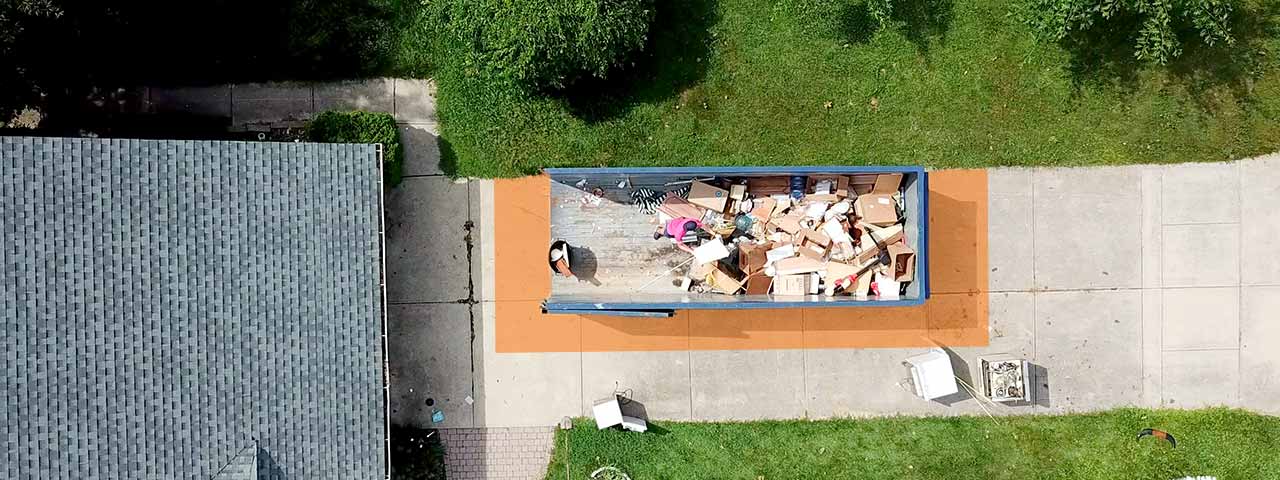
How Haulers and Landfills Check Dumpsters for Banned Items
Whether you're cleaning up at home with a residential dumpster rental or renting a container on a jobsite, your debris gets checked at three main points before it reaches the landfill.
1. Driver On-Site Visual Checks
Before loading your roll off dumpster onto the truck, the driver scans the top layer of debris for restricted or prohibited materials.
2. Scale House & Automated Monitoring
At the landfill or transfer station, your dumpster is weighed and goes through a scale house inspection. Some facilities also use cameras or sensors to flag problem loads.
3. Tipping Floor & Transfer Station Spotters
Once your dumpster is emptied onto the tipping floor, a trained landfill spotter combs through the debris. Items buried at the bottom of your container usually surface at this point.
What Happens When Waste Service Providers Spot a Prohibited Item?
There are two potential scenarios, depending on where the item is found.
On-Site Refusal (Before Hauling)
- Driver Refusal & Trip Fee: If your driver finds a prohibited item in your container, the result is an on-site refusal. The driver won't haul your dumpster while the item remains in it and you'll be charged a trip fee to cover the wasted trip.
- Renter Removes Item: You'll need to take the item out, then schedule a new pickup with your dumpster rental company. If you're present when the driver spots the item, you may be able to avoid the trip fee and the hassle of rescheduling by removing it right away.
Landfill Detection (After Hauling)
- Spotter Isolation: The spotter pulls the item from your load and sets it aside for proper handling.
- Documentation by Facility: The landfill records the item, usually on the weight ticket. This is the official scale receipt showing your load's weight and any added charges.
- Account Tracing & Photo Proof: Each load is tied to a specific dumpster and address, so the fee is traced back to your rental. Some facilities take photographic proof as well.
- Fee Applied: A prohibited item fee is added to your bill after disposal. In rare cases, the landfill may send the item back to you.
Need a dumpster to handle the mess?
Get a Price and Place Your Order Give Us a Call to Learn More
The Cost of Loading a Prohibited Item
Here are the most common dumpster fees and risks related to prohibited items. Details vary by location, landfill and type of item loaded.
Contamination Fee
Also called a prohibited item fee, this charge covers the effort of removing and handling a banned item. The cost is added on top of the standard tipping fee already included in most bundled pricing.
Trip Fee
This fee applies when your driver can't haul your dumpster because of a prohibited item, an overfilled bin or a blocked path. It covers the fuel and effort spent on a wasted trip.
Environmental & Legal Risks
Lithium-ion batteries, fuel cans and propane tanks can spark fires inside the truck or at the landfill. If the damage can be traced back to a prohibited item loaded by a customer, liability may fall on them.

Pro Tip
Did you know? The U.S. Environmental Protection Agency identified more than 240 fires caused by lithium-ion batteries at 64 waste facilities between 2013 and 2020^1. Take batteries from phones, laptops and power tools to a battery drop-off location instead.
What to Do if You've Already Loaded a Prohibited Item
Contact Customer Service
Reach out before pickup. Your dumpster provider can tell you if the item is accepted or prohibited and what to do next. If you're renting with us, give us a call or ask a question through your Service Dashboard.
Safe Removal Options
Remove the item before your pickup so your dumpster haul can proceed without delay. Most cities have a household hazardous waste drop-off site or collection day for paint, batteries, chemicals and electronics.
Pre-Pickup Dumpster Checklist
Run through this list the day before your pickup to avoid fees and delays:
[ ] Scan your dumpster for prohibited items
[ ] Remove any tires and set aside mattresses, appliances or electronics unless they're accepted in your area
[ ] Make sure your debris is below the fill line and within your weight limit
[ ] If you used a tarp to cover the dumpster, remove it before pickup
[ ] Maintain a clear access path for the roll off truck
FAQs About Loading a Prohibited Item
How much is a dumpster contamination fee?
The cost depends on your location, the landfill and the item itself. A contamination fee covers the expense of removing and handling the item separately, and is charged on top of the disposal costs included in most bundled pricing.
What happens if a neighbor or passerby throws a prohibited item into my dumpster?
You're responsible for any debris in your container at pickup, since there's no way to confirm who loaded the item. To prevent illegal dumping, place your dumpster in a visible spot, cover it with a tarp when you're not using it and check its contents before pickup.
Can I throw paint cans in a dumpster if they're dried out?
Dry paint cans are accepted in most areas. Let the cans dry out completely, seal them and place them in a plastic bag before loading.
What happens if an item catches fire or spills during transport?
The driver stops, follows safety procedures and may call local fire crews. If the cause is traced back to a prohibited item in your dumpster, you may be responsible for related costs.
Can I put electronics in a dumpster?
Typically, no. Many states ban electronics from landfills because they contain lead, mercury and other heavy metals. Some areas accept certain items, so check with your dumpster provider for details before disposing of electronics in your container.
What happens if a prohibited item damages the dumpster itself?
If a prohibited item like a corrosive chemical or lithium-ion battery damages your dumpster, you may be responsible for repair or replacement costs.
Glossary Term Index
Accepted Materials | Batteries | Clean Load | Disposal Fee
Hazardous Waste | Landfill | Mattress Disposal | Paint Disposal
Prohibited Items | Restricted Materials | Roll Off Dumpster | Service Dashboard


